ARTICLE
What Does Homebound Mean for Medicare?
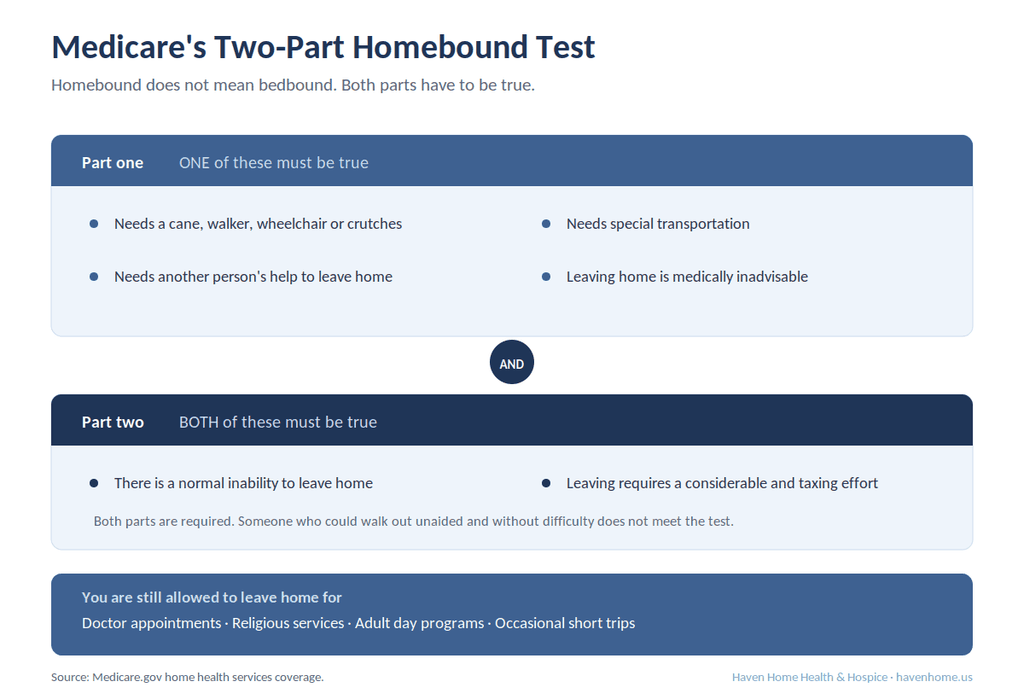
Homebound does not mean bedbound, and it does not mean never leaving the house. Medicare uses a two-part test, and plenty of people who go to church on Sunday and to the doctor on Wednesday still meet it.
This matters because homebound status is one of the requirements for Medicare to pay for home health care. Families talk themselves out of applying because they picture someone who cannot get out of bed, and that is not the standard.
This guide covers the actual test and what you are still allowed to leave home for. It also covers who decides, and what happens if your parent does not meet it. If you are unsure where your family stands, you can call our home health team in Ozark and ask.

Medicare’s two-part test
Both parts have to be true.
Part one: you need help to leave, or leaving is unsafe. Because of an illness or injury, one of these must apply:
Part two: leaving home is genuinely hard:
There must be a normal inability to leave home, and leaving must require a considerable and taxing effort.
There is one exception. Durable medical equipment such as a walker, a wheelchair or a hospital bed carries 20% coinsurance after the Part B deductible.
Both parts are required. Someone who could walk out of the house unaided and without difficulty does not meet the test, even if they would rather not go out. Someone who needs a walker and is wiped out for an hour afterwards generally does.
What you are still allowed to leave home for
This is the part families get wrong most often, and it keeps people from applying who would qualify.
Medicare states plainly that a person may leave home for medical treatment or short, infrequent absences for non-medical reasons, like attending religious services.
So the following generally do not cost someone their homebound status:
What matters is the character of leaving, not the count. If getting to church takes two people, a walker and a recovery nap afterwards, going every Sunday does not disqualify anyone.
What would raise a question is routine, independent outings. Driving to the grocery store alone each week and carrying the bags in suggests the test is not met.
Who decides, and how
Not you, and not the home health agency. A doctor, or in some cases a nurse practitioner, physician assistant or clinical nurse specialist, has to certify it.
That certification happens as part of a face-to-face encounter. The provider has to see the patient in person, within a window around the start of care. They then document the specific reasons the person is considered homebound. Generic wording does not survive review. The record has to say what actually stops this person getting out of the house.
The practical implication for families: when your parent sees their doctor, make sure the doctor hears the real picture. People minimize. A man who has not left the house unaided in four months will tell his physician he is doing fine. If the chart says fine, the certification is harder to support.
Go to the appointment if you can, and describe the last month honestly.
Homebound is only one of the requirements
Meeting the homebound test does not by itself get Medicare to pay. Four things have to line up.
That second item trips families up as often as the homebound question does. Medicare home health is skilled care. Say what your parent needs is help bathing and someone to make lunch. That is a real need, and an important one. But it is not skilled care, so Medicare will not cover it on its own. We cover the difference and what each costs in our guide to home health care costs.
What does intermittent mean?
It means part-time, and Medicare puts numbers on it.
In most cases, skilled nursing and aide services combined can run up to 8 hours a day, for a maximum of 28 hours a week. For short periods, a provider can authorize more, up to 35 hours a week, if they decide it is necessary.
Someone who needs more than part-time or intermittent skilled care does not qualify for the home health benefit. That sounds backwards to most families, who assume more need means more coverage. It does not work that way.
Within those limits, Medicare says that someone who qualifies can get unlimited home health visits.
What if your parent does not meet the test?
They still have options, and this is worth knowing before you give up on the idea of help at home.
In-home care does not require homebound status, a doctor’s order or a skilled need. An aide helps with bathing, dressing, meals, errands and company, billed by the hour and usually paid privately. Nothing about Medicare’s rules applies to it.
Consumer Directed Services. MO HealthNet is Missouri’s Medicaid program. If your parent qualifies for it and needs a nursing-facility level of care, they may be able to hire and direct their own personal care attendant. That can include an adult child or another relative. A spouse or legal guardian cannot be paid this way.
Reassessment later. Homebound status is not permanent in either direction. People qualify after a fall or a hospital stay who did not qualify three months earlier. If your parent’s situation changes, ask again.
Three things to take away. Homebound is a two-part test and it does not mean bedbound. You can still leave home for the doctor, for church and for occasional short trips. And homebound is only one of four requirements, so the skilled care question matters just as much.
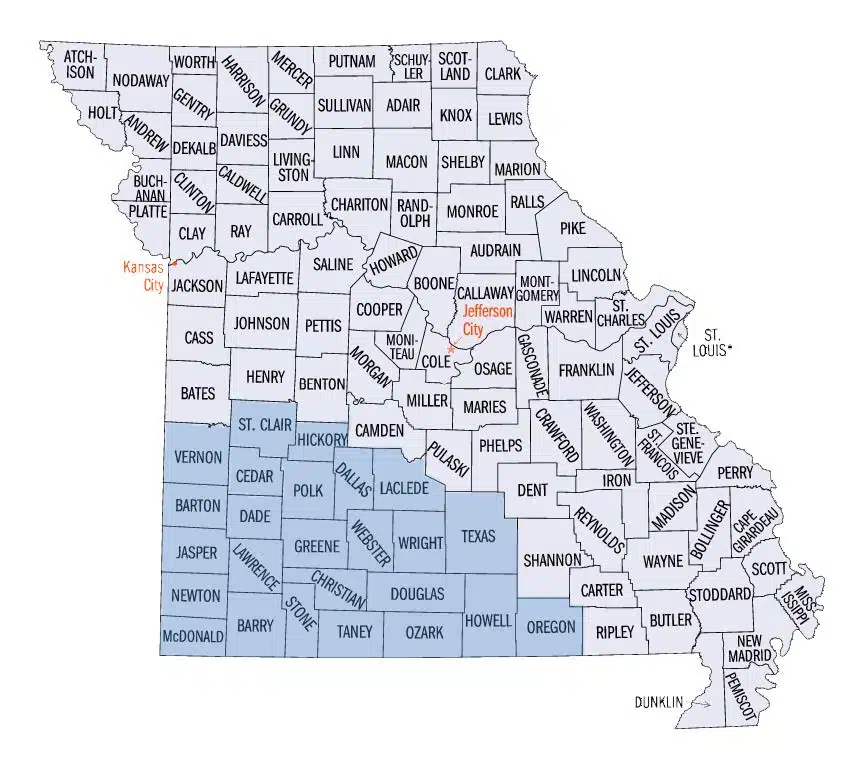
Haven is locally owned, based in Ozark, and serving Springfield, Ozark, Nixa, Republic, Rogersville and Branson. Call to ask whether your parent would qualify.
Take Action Now
Talk to a Haven nurse
Locally owned, with our office in Ozark. Call to find out whether your parent would qualify and what the first visit would look like.