ARTICLE
Is Hospice Only for End of Life?
A person can outlive the six-month estimate and stay on hospice. A person can start hospice while still walking, talking, […]
No, hospice is not only for the last days of life.
If you’re trying to figure out hospice care for a parent or loved one, this is probably the first thing you need to hear: hospice is not a deathbed service, and it’s not a countdown clock. Hospice care covered by Medicare is available when a doctor believes someone has about six months or less to live if their diagnosis follows its expected course, but that’s a prognosis, not a deadline. Many people receive hospice care for months, and some improve enough to leave it altogether.
There’s also growing evidence that hospice can extend life, not just ease it. A widely cited study found that patients with certain terminal illnesses, including congestive heart failure and lung cancer, lived on average about a month longer on hospice than similar patients who did not enroll. Comfort-focused care, done well, is not the same as giving up.
That distinction matters, because so many families wait too long to start. The median hospice stay in the U.S. is only about 17 days. That means half of all patients receive two and a half weeks of care or less, and roughly one in four dies within a week of enrolling. Those families were entitled to months of nursing visits, medication management, medical equipment, and hands-on support for their loved one. They got days.
We don’t want that for your family.
This post walks through what the six-month hospice guideline actually means, what happens if your loved one lives longer than six months, whether you can stop hospice and return to treatment, which diagnoses qualify for hospice care, and exactly what hospice covered by Medicare actually includes. If you’re trying to figure out where your family stands right now, you don’t have to work it out alone. You can call Haven to speak with someone today, who can walk you through your options.
Call to ask what hospice covers
Talk with a Haven about whether your parent qualifies, what Medicare pays for, and what the first week looks like.

What Does “Six Months or Less” Really Mean for Hospice
It means a doctor believes your loved one’s diagnosis is likely to shorten their life to about six months or less if it follows its usual course. It does not mean anyone has predicted a date.
To start hospice under Medicare, the hospice benefit rules on Medicare.gov require certification by a hospice physician and, if your parent has one, their own attending doctor. Both are making a clinical estimate about the likely path of a serious illness. Estimates are not guaranteed.
Two things follow from that, and they surprise most families:
A person can outlive the six-month estimate and stay on hospice.
A person can start hospice while still walking, talking, gardening, and going to church.
Being eligible for hospice today does not mean your loved one is dying this week. It means their diagnosis has reached a point where care focused on comfort is likely to serve them better than more hospital admissions.
How Do Hospice Benefit Periods Work?
Medicare doesn’t approve hospice as one open-ended stretch of care. Instead, it’s structured into benefit periods, and understanding how they work can help you know what to expect if your parent or loved one is in hospice for longer than a few weeks.
The first two benefit periods each last 90 days. After that, if your loved one is still eligible, hospice continues in 60-day periods, and there is no limit to how many 60-day periods someone can have. As long as a person continues to meet the criteria for hospice, care can continue for as long as it’s needed, whether that’s a few months or considerably longer.
At the start of each benefit period, your loved one’s hospice team has to recertify that they still qualify. For the first 90-day period, this certification comes from the hospice medical director.
Starting with the third benefit period, Medicare also requires a face to face visit between your loved one and a hospice physician or nurse practitioner before recertification can happen. This visit isn’t a formality. It’s a chance for the hospice team to see how your parent is doing in person and confirm that hospice, rather than another form of care, is still the right fit.
None of this means your family needs to track deadlines or worry about care being cut off without warning. The hospice team manages recertification on their end. But knowing how the periods work can help you understand what those check-ins are for, and why your loved one’s care team may ask more questions or schedule a visit around those 90 and 60-day markers.
Can You Leave Hospice and Go Back to Treatment?
Yes. A patient can revoke the hospice benefit at any time, return to standard Medicare coverage, restart treatment aimed at curing or controlling the illness, and elect hospice again later.
That door stays open, and people use it. Some patients enroll, stabilize under closer symptom management, and no longer meet the prognosis standard. Recent federal reporting puts the share of hospice patients discharged alive between 15 and 17.5 percent.
So the decision is not permanent, and it is not a decision to stop being treated. It is a decision to change the goal of care from controlling the disease to controlling the symptoms. If a new treatment becomes available, or if your mother or loved one simply changes their mind, they can change course.
Choosing comfort also does not automatically mean less time. An earlier analysis of Medicare records, published in the Journal of Pain and Symptom Management, found hospice patients survived about 29 days longer on average than similar patients who did not use hospice. That study was observational rather than randomized, and the difference varied by diagnosis.
Neither study promises anyone more time. What they do tell you is that good symptom care is not a trade against survival, which is the fear that keeps most families waiting.

Is Hospice Only for Cancer Patients?
No. Cancer patients are now a minority of hospice admissions. Most people on hospice have something else entirely. Dementia and Alzheimer’s disease, heart failure and other circulatory conditions, COPD and other lung diseases, stroke, and kidney or liver failure are all common.
This shift is one of the biggest reasons families in the Ozarks miss the window. A daughter watching her mother’s dementia advance over four years doesn’t think “hospice,” because nothing about it looks like a crisis. There’s no scan, no stage, no clear turning point. But advanced dementia and end-stage heart failure are exactly the kind of long, uneven illnesses the hospice benefit was designed for.
If the diagnosis is serious but the prognosis runs longer than six months, hospice isn’t the right fit yet, and we’ll tell you that honestly. At that stage, home health care, which brings skilled nursing and therapy into the house under a doctor’s orders, or in-home care for help with bathing, meals, and mobility, is often the better answer. Home health has its own Medicare eligibility rules, separate from hospice.
Not sure hospice is the right fit yet?
If the prognosis is longer than six months, home health or in-home care is often the better answer. We will tell you which one fits.
What Does Medicare Cover Under Hospice?
For care related to their diagnosis, Medicare Part A covers hospice in full for people who qualify. According to the Medicare hospice benefits guide, that includes:
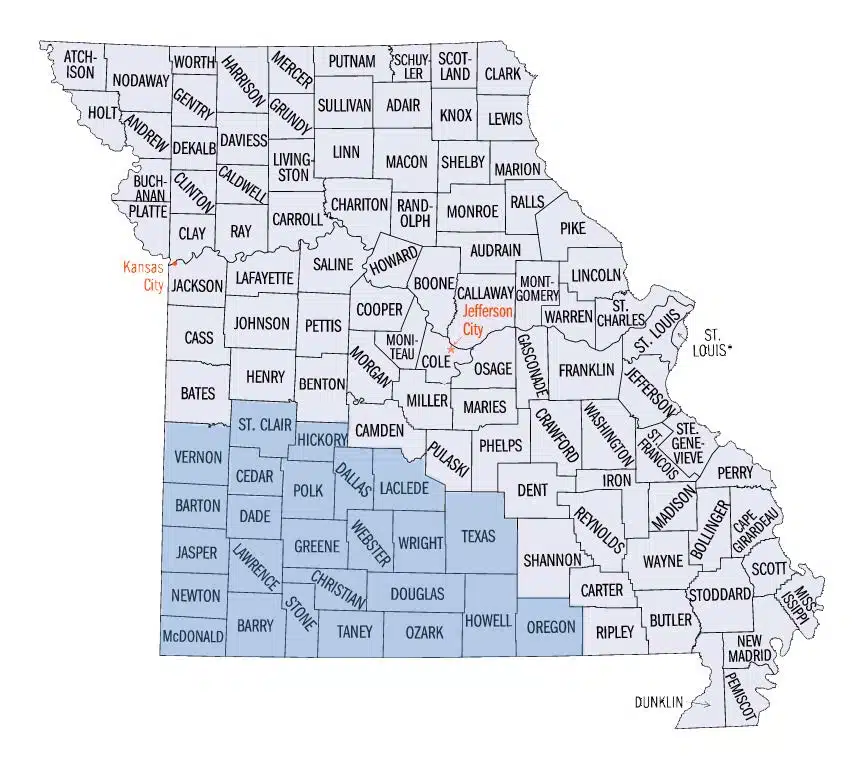
Most hospice care happens right where the person already lives. For families in Springfield, Ozark, Nixa, Republic, Rogersville, and Branson, that usually means their own house, with a nurse driving out to them.
How Is Hospice Different From Palliative Care?
These two terms get used interchangeably, but they’re not the same thing, and understanding the difference can help you figure out what your parent or loved one actually needs right now.
Palliative care treats symptoms at any stage of a serious illness, and it can run alongside treatment meant to cure or control the disease. Someone can be in active chemotherapy and also receive palliative care for nausea and pain at the same time. There’s no six-month prognosis requirement, and there’s no need to stop pursuing a cure to qualify.
Hospice is comfort-focused care for someone who is no longer pursuing a cure and has a prognosis of about six months or less. The goal shifts from fighting the disease to managing symptoms and preserving quality of life.
The National Institute on Aging explains the difference the same way. A useful shorthand: all hospice care is palliative care, but not all palliative care is hospice.
So if your mother is in active chemotherapy, she can have palliative care for nausea and pain while she’s still pursuing treatment. If that treatment stops working and the goal shifts to comfort, she may become eligible for hospice at that point.
One is about managing symptoms while still fighting. The other is about comfort when the fight for a cure is over. Both are about your loved one’s quality of life, just at different points in the journey.
When Should You Call Hospice?
Earlier than you think. Earlier than most families do.
You do not need a doctor’s referral to ask questions about hospice, and calling to ask does not commit your parent or loved one to anything. It is simply information, and it is available to you the moment you start wondering whether it’s time.
Most families wait for a crisis to make the decision for them. But by the time that happens, weeks or months of covered care, support, and comfort are often already gone. Waiting for certainty means waiting for the wrong moment.
Here are signs worth paying attention to. None of them means it’s time. That’s a decision for your loved one and their doctor to make together. But any one of them is a reasonable, even overdue, moment to start asking questions:
If you’re seeing any of this in your loved one, you’re not jumping the gun by asking about hospice. You’re doing exactly what the benefit was built for.
The question to bring to their next appointment is simple: given where this illness is right now, would my loved one qualify for hospice, and what would actually change if they enrolled?
You can also skip the appointment entirely and call Haven Home Health & Hospice directly. At Haven Home Health & Hospice, someone from our Hospice team can talk through your loved one’s specific situation and help you understand what your family’s options actually look like right now, not eventually.
Getting a Clear Answer
Hospice is defined by a six-month prognosis, not by the final days, and people can and do stay on it far longer. You can leave it and come back if the situation changes or the goals of care change. And it covers far more than most families expect, including support for you, not just your loved one, for a full year after they’ve passed.
If you take nothing else from this post, take this: it’s okay to ask before you think you’re ready. It’s okay to ask even if you’re not sure yet. Asking is not a commitment, and it is never too early to understand your options.
That’s exactly why we’re here.
Haven Home Health & Hospice is locally owned, with our office right here in Ozark, answered by someone who knows this community. We’re also Joint Commission accredited, which means our care meets some of the highest standards in the country.
When you call, you’ll talk to a real nurse who works here, someone who can walk you through whether your loved one would qualify for hospice right now, and what the first week would actually look like for your family. No pressure, no obligation. Just honest answers from people who live and work in the same towns you do.
If you’re wondering whether it’s time to ask, that’s reason enough to call. We’d be glad to talk it through with you.
Take Action Now
Call to Ask What Hospice Covers
Locally owned, with our office in Ozark. Call to find out whether your parent qualifies and what the first week of hospice would actually look like.