ARTICLE
How Long Does Hospice Really Last?
Here’s the truth: hospice doesn’t have a time limit. It lasts for as long as a doctor keeps confirming that, if the illness follows its usual course, it’s expected to limit life to around six months.
That six-month number is a prognosis, not a countdown clock. Plenty of people live well past it, and nobody gets removed from hospice for doing so. What happens instead is simply a paperwork step: a doctor signs off again, and care continues.
In reality, most people are on hospice for far less than six months, and that’s actually the bigger problem families run into. Below, we’ll walk through how the benefit periods work, how long people actually tend to stay, what happens if your mom or dad outlives the six-month estimate, whether people ever leave hospice alive, and whether hospice makes death come sooner.
If you’re trying to figure out where your family stands right now, you can also call our hospice team in Ozark and talk it through.
Call our hospice team in Ozark
Talk with a Haven about whether your parent qualifies, what Medicare pays for, and what the first week looks like.

So how does the timing actually work?
Medicare breaks hospice into stretches of time called benefit periods, and there’s no limit on how many a person can have.
The first stretch can run up to 90 days. So can the second. After that, it switches to 60 day stretches, and again, there’s no cap, as long as the person still qualifies medically.
At the start of each new period, a hospice doctor checks in and recertifies that the prognosis still holds. Starting with the third period, and every one after, a doctor or nurse practitioner also has to actually see the patient in person first. That’s called a face to face encounter, and it exists so the decision isn’t made only from notes on a chart.
For families, here’s what that boils down to. Every 90 days at first, and then every 60 days after that, someone confirms this is still the right level of care. That’s really the whole system.
How long do people actually stay, though?
Much shorter than most people expect, and the two numbers you’ll hear quoted are surprisingly far apart.
In 2024, the median hospice stay nationally was just 19 days, while the average was 99.6 days. Both are accurate. The median means half of people stayed 19 days or less. The average gets pulled much higher by a smaller group of people who stayed for a long time.
When to call hospice
Hospice usually starts when a doctor confirms a life-limiting illness with a prognosis of six months or less. Read our article to learn more.
Breaking it down further, among people who died on hospice in 2024:
01
The shortest quarter stayed 5 days or fewer
02
One in ten stayed 2 days or fewer
03
Half stayed 19 days or fewer
04
A quarter stayed 90 days or more
05
One in ten stayed 291 days or more
Here’s the number that should really give families pause. More than a quarter of hospice patients enroll only in their very las week of life. That simply isn’t enough time for a hospice team to get symptoms under control, train the family, or help anyone feel prepared.
What about here in Missouri?
The picture is pretty similar. The median hospice stay across the state is 20 days, with an average of 76 days, across 127 providers. Just under 53% of Missouri Medicare patients who died had used hospice at all, though that number drops to 28.6% in rural parts of the state.
The state and national numbers are counted a bit differently, so they won’t line up exactly, but the takeaway is the same. Most families call later than they wish they had.
If you’re reading this because you’re not sure it’s time yet, that question deserves its own answer. Our guide on when to call hospice covers the signs doctors typically look for.

What if your parent lives well past six months?
Nothing bad happens. Honestly, this is the worry we hear most often, and it comes from a misunderstanding.
Nobody is removed from hospice for living longer than expected. At the end of each benefit period, the doctor simply checks in again, and if the prognosis still fits, care continues exactly as before. Some people stay on hospice for a year or more.
The six-month estimate is just what a doctor expects if things follow a typical path. But illness doesn’t always follow the typical path. Sometimes people actually stabilize because their symptoms are finally being managed well. They’re sleeping better, eating better, and not being moved in and out of the hospital anymore.
How long someone stays also depends a great deal on the diagnosis. In 2024, the average stay was 169 days for neurological conditions such as dementia and Parkinson’s, and 133 days for COPD, compared to 51 days for cancer. Cancer tends to follow a more predictable trajectory, so people get referred later. Dementia is much less predictable, so stays run longer.
Where someone lives matters too. Average stays were 174 days in assisted living, 120 days in nursing facilities, and 100 days at home.
So if your mom has dementia and has been on hospice for eight months, she isn’t an outlier. She is actually fairly typical.
Not sure hospice is the right fit yet?
If the prognosis is longer than six months, home health or in-home care is often the better answer. We will tell you which one fits.
Can someone leave hospice while they’re still alive?
Yes, and it happens more often than people realize. In 2024, about one in five hospice discharges, or 19.1%, were live discharges, meaning the person left hospice without having passed away.
There are generally four reasons this happens.
The condition improves. If a doctor can no longer honestly certify a six-month prognosis, the person no longer qualifies. That’s good news wearing a paperwork disguise.
The patient chooses to stop. Anyone can leave hospice whenever they want, and this is called revoking. Families sometimes do this to pursue a new treatment that has become available.
They switch hospice providers. Changing providers is allowed once per benefit period, and it technically counts as a discharge from the first one.
They move out of the service area. If a family relocates out of the Ozarks, for example, they would transfer to whichever hospice serves their new area.
Leaving isn’t final. Someone who is discharged alive can enroll in hospice again later if they meet the criteria a second time. Regular Medicare covers them in the meantime, and many families rely on home health or in-home care during that stretch.
One thing worth keeping in mind: live discharge rates vary a great deal between providers, and an unusually high rate can be a sign that a hospice is enrolling people who were never really eligible in the first place. It’s a fair question to ask before choosing one.
Does hospice make death come sooner?
The research says no. If anything, it points in the opposite direction.
One study, published in the Journal of Pain and Symptom Management, analyzed Medicare records for 4,493 patients across six conditions and found that people on hospice lived, on average, 29 days longer than similar patients who did not use hospice. The difference was largest for congestive heart failure, where hospice patients averaged 402 days compared to 321, and for lung cancer, at 279 days compared to 240.
Two honest caveats are worth noting. This was a retrospective study, meaning it compared records of people who had already made different choices rather than randomly assigning them to a group. It shows a pattern, not proof of cause and effect. And the data comes from 1998 to 2002, so it isn’t recent.
What can be said fairly is this. There is no good evidence that hospice shortens life, and there is reasonable evidence pointing the other way. Choosing hospice isn’t giving up on someone. It’s simply changing what the care is meant to achieve.
Nobody can promise exactly how much time someone has left. But a good hospice team can help make sure that time, however long it turns out to be, goes better.
The short version
Three things are worth remembering. Hospice has no time limit, and outliving six months simply means recertification, not removal. Most Missouri families end up with about 20 days, which is far less than the benefit allows and usually less than they would have wanted in hindsight. And leaving hospice, whether by choice or because a condition improves, does not have to be permanent.
If you’re wondering whether it’s too soon to call, it almost never is. Very few families ever say they called too early.
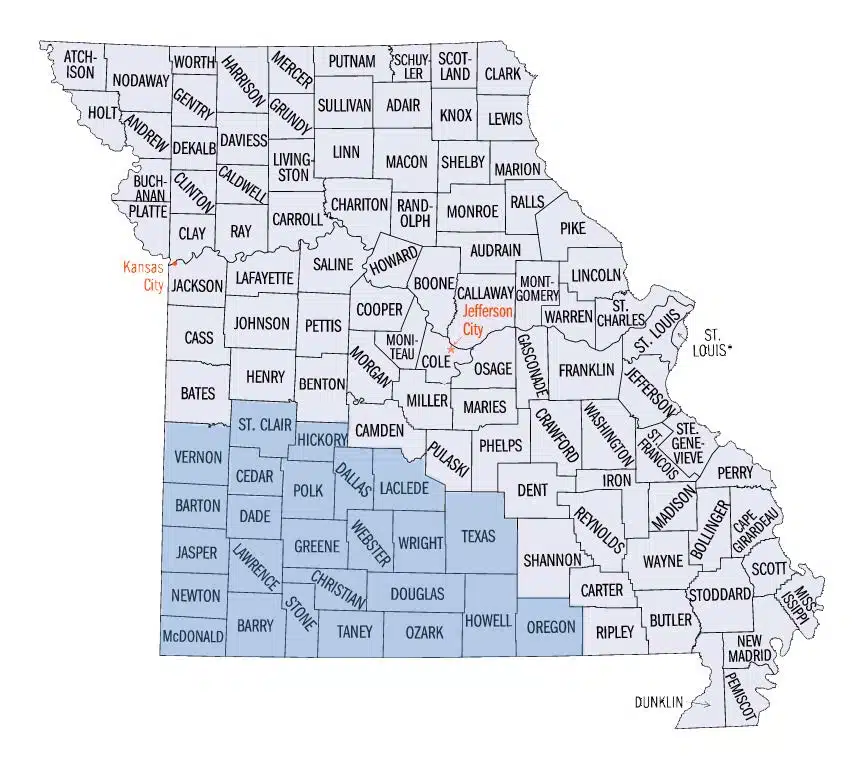
Haven is locally owned, based in Ozark, and serves Springfield, Ozark, Nixa, Republic, Rogersville, and Branson. Call us at 417-731-7055 to talk to someone on our hospice team about whether it’s time, and what would actually change if your parent enrolled.
Take Action Now
Call to ask whether it is time
Locally owned, with our office in Ozark. Call to find out whether your parent qualifies and what the first week of hospice would actually look like.