ARTICLE
How Much Does Hospice Actually Cost?
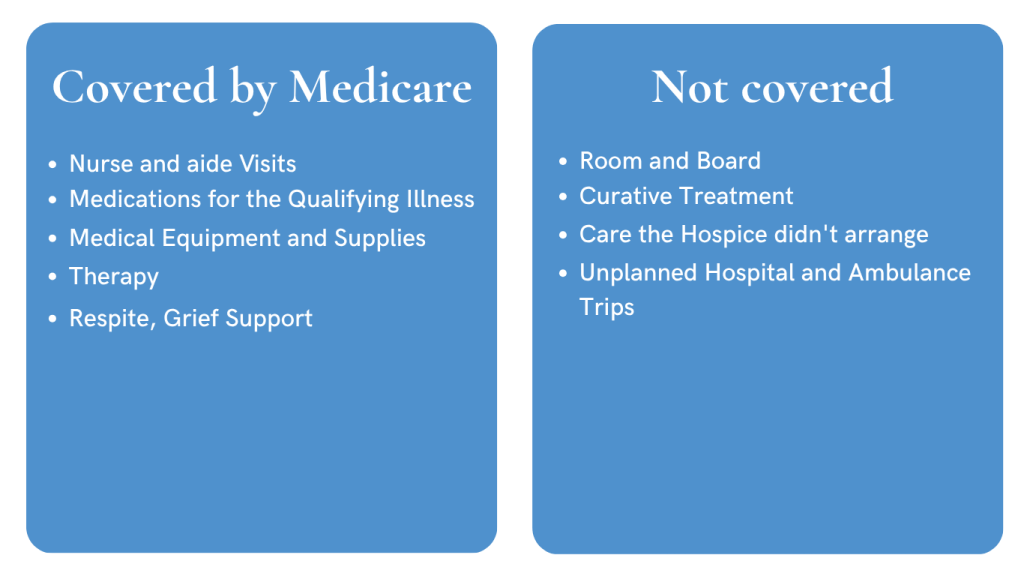
Here’s the good news: if your loved one qualifies, Medicare Part A covers hospice care in full. That includes nurse visits, medications for the qualifying illness, and medical equipment and supplies. There’s no deductible, and most families in Missouri end up paying nothing out of pocket.
There is one real exception, though, and it’s the reason this question keeps coming up. Medicare does not pay for room and board. If your mother lives at home, that costs you nothing extra. But if she lives in a nursing home or assisted living, her monthly charge there keeps going.
This guide walks through what Medicare pays for, the two small charges you might still see, how room and board works depending on where someone lives, what MO HealthNet covers for Missouri families, and what your options are if you don’t have Medicare. If you want a straight answer about your own family’s situation, you can always call our hospice team in Ozark and ask.
Call our hospice team in Ozark
Talk with a Haven about whether your parent qualifies, what Medicare pays for, and what the first week looks like.

So what does Medicare actually pay for?
More than most people expect. Once your loved one elects hospice, Medicare’s hospice benefit covers pretty much everything needed to manage the qualifying illness and any related conditions.
That includes:
01
Visits from the hospice nurse, aide, social worker, and chaplain
02
Care from the hospice doctor, and from your own doctor too, if you name them as the attending medical professional
03
Prescription drugs for pain and symptom control
04
Medical equipment like a hospital bed, oxygen, or a wheelchair
05
Medical supplies, even ordinary things like gloves and bandages
06
Physical, occupational, and speech therapy when it helps with comfort
07
Short inpatient stays if symptoms can’t be managed at home
08
Short respite stays so the family caregiver can rest
09
Grief support for the family, which continues even after the death
Medicare’s own guidance puts it simply: Medicare pays the hospice provider directly for the care, and there’s no deductible involved.
One thing to keep in mind: care for health problems unrelated to the qualifying illness stays on regular Medicare, with the usual deductibles and coinsurance still applying.
So what will you actually pay out of pocket?
Just two small things.
Up to $5 per prescription. For outpatient drugs used for pain and symptom management, Medicare allows hospices to charge a copayment of up to $5 per prescription. Many hospices don’t charge anything at all.
5 percent for inpatient respite care. If your loved one has a short respite stay so you can rest, you might owe 5 percent of the Medicare-approved amount. That copayment can never be more than the inpatient hospital deductible.
That’s the whole list for covered hospice care. If you’re ever handed a bill for something else, it’s completely fair to ask the hospice to explain exactly what it’s for before you pay it.
Why isn’t room and board covered?
Because Medicare is paying for care, not for housing. How this plays out really depends on where your loved one lives, and this is where families sometimes get caught off guard.
If your parent lives at home, nothing changes. There’s no room and board charge to begin with, so this exclusion doesn’t really affect you. The mortgage or rent stays exactly what it always was, and hospice doesn’t add anything on top of it.
This is actually one reason most hospice care happens at home. It’s where people generally want to be, and it also keeps things financially simple.
If your parent lives in a nursing home or assisted living, the exclusion becomes real. Medicare will pay for the hospice care delivered inside the building, but not for the room itself. Medicare states plainly that it does not cover room and board for people living in a nursing home or hospice inpatient facility.
So the monthly charge from the facility keeps going, paid the same way it was before hospice started, whether that’s privately, through long-term care insurance, or through MO HealthNet. Hospice doesn’t increase that bill, but it doesn’t make it disappear either.
One thing does get covered, though. If the hospice team decides your loved one needs a short inpatient stay or a respite stay and arranges it, Medicare covers that.
Not sure hospice is the right fit yet?
If the prognosis is longer than six months, home health or in-home care is often the better answer. We will tell you which one fits.
What if your parent is on MO HealthNet?
Then Missouri law steps in to fill the gap, and this is something very few families know about.
MO HealthNet is Missouri’s Medicaid program. If your loved one qualifies and lives in a nursing home, the state pays the room and board that Medicare won’t.
Missouri law sets that rate. It requires that payment for room and board provided by a nursing home be no less than 95 percent of what would have been paid for that patient’s facility services.
The Missouri Department of Social Services explains it a bit more plainly: hospices serving MO HealthNet participants in a nursing facility are reimbursed at 95 percent of the facility’s daily rate for room and board.
So a Missouri family whose parent has both Medicare and MO HealthNet, and who lives in a nursing home, can end up with both pieces covered. Medicare pays for the hospice care itself. MO HealthNet covers the room. The money actually flows through the hospice rather than directly to the facility, which is part of why most families never even notice it happening.
Eligibility for MO HealthNet is its own topic, and it comes down to income and assets. Because those limits change, it’s worth asking the hospice or the nursing home’s business office to walk you through exactly where your parent stands.
What if you don’t have Medicare?
Hospice isn’t only for people on Medicare, even though that’s how most people end up paying for it.
Private insurance. Most commercial plans include a hospice benefit built along similar lines to Medicare’s. Coverage details vary quite a bit, so it’s worth calling the number on the insurance card and asking what the plan covers and whether the hospice is in network.
Medicare Advantage. If your loved one is on an Advantage plan, hospice care is actually paid for by original Medicare rather than the plan itself. The plan continues covering medications and any extra benefits it offers. Choosing hospice doesn’t force anyone out of their plan.
Veterans. The VA covers hospice care for enrolled veterans, and there are no copays for hospice care, whether it’s provided directly by the VA or through an organization with a VA contract.
Paying privately. A family without any coverage pays the hospice directly. There’s no single published national rate, so it’s worth asking any hospice you’re considering for its rates in writing before enrolling.
Financial help. Many hospices provide care to families who can’t pay, funded by donations and community support. This isn’t something hospices tend to advertise loudly, and plenty of families never think to ask. It’s worth asking.
What does Medicare actually pay the hospice itself?
This isn’t a number most families ever see, but there’s no real reason to keep it hidden.
Medicare pays a hospice a daily rate for every day a patient is enrolled, whether or not staff actually visit that day. The rate is updated each year. For the federal fiscal year that began in October 2025, CMS raised hospice payment rates by 2.6 percent and set the annual per patient cap at $35,361.44.
Under that update, the standard national home care rate works out to about $230.83 per day for the first 60 days and $181.94 per day from day 61 onward, before local wage adjustments are applied. Because rates are adjusted for local labor costs, the actual rate paid for hospice care in the Ozarks will differ somewhat from the national figure.
Across the country in 2024, Medicare’s average payment worked out to about $191 per day, compared to average hospice costs of around $168 per day.
In Missouri specifically, Medicare spent $427 million on hospice care that year, averaging about $171 per day, across 127 hospice providers.
None of that comes out of your pocket. It’s simply what sits behind the phrase “covered by Medicare.”
What this means for your family
Three things worth remembering. Medicare Part A covers hospice care in full for people who qualify, with no deductible and no more than $5 per prescription. Room and board is the one real exception, and it only matters if your loved one lives in a facility. And if they have MO HealthNet, Missouri covers 95 percent of the nursing home’s daily rate for that room and board.
Cost should never be the reason a family waits. In most cases here in the Ozarks, there’s simply no cost to be waiting over.
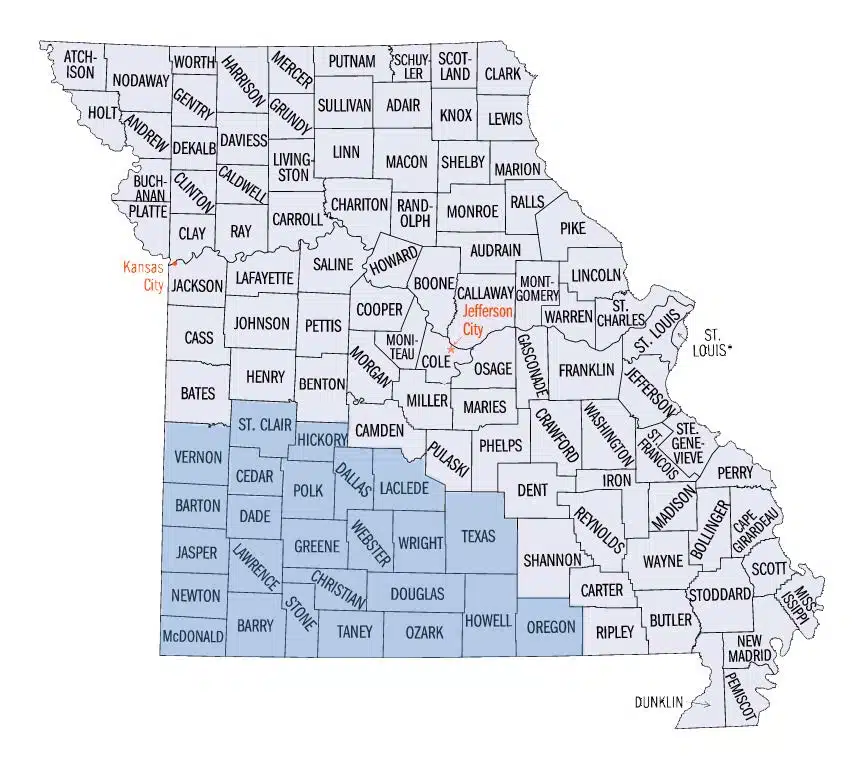
Haven is locally owned, based in Ozark, and serves Springfield, Ozark, Nixa, Republic, Rogersville, and Branson.
Call us at 417-731-7055 to talk with someone on our hospice team about what Medicare would cover for your family’s specific situation.
Take Action Now
Call to ask whether it is time
Locally owned, with our office in Ozark. Call to find out whether your parent qualifies and what the first week of hospice would actually look like.