
Home health care nurses play a vital role in the healthcare system. They provide essential medical care in the comfort of patients’ homes. This personalized approach allows for tailored treatment plans.
These nurses perform a wide range of duties. They assess patients’ health, manage medications, and provide wound care. Their responsibilities extend beyond medical tasks.
Education is a key component of their role. They teach patients and families about health conditions and self-care, empowering individuals to manage their health effectively.
Home health care nurses also offer emotional support. They help patients and families cope with illness and recovery. Their presence provides comfort and reassurance.
Collaboration is crucial in home health care. Nurses coordinate with other healthcare professionals to ensure comprehensive care. This teamwork enhances patient outcomes.
Home health care nurses face unique challenges. They work in diverse environments and must adapt to each situation. Their problem-solving skills are essential.
These nurses are advocates for their patients. They ensure access to necessary resources and support. Their dedication improves patients’ quality of life.
Understanding the essential duties of home health care nurses highlights their critical role in delivering home health services. Their work supports both patients and caregivers.
Understanding Home Health Care Nursing
Home health care nursing is a specialized field within healthcare. It focuses on providing medical services in a patient’s home, prioritizing personalized and patient-centered care.
Home health nurses address a wide range of healthcare needs, serving diverse patient groups, from children to the elderly. Each patient’s home environment presents unique challenges and opportunities.
Key Aspects of Home Health Nursing:
- Patient-Centered Care: Tailored to individual needs and preferences.
- In-Home Medical Services: Including assessments and treatments.
- Patient Education: Empowering patients with knowledge for better self-care.
Home health nursing also involves advocacy. Nurses act as liaisons between patients and other healthcare professionals, ensuring coordinated care that meets patients’ holistic needs.

The field of home health care nursing is growing. As the population ages, more patients prefer to receive care at home. Nurses in this field are essential to delivering effective home health services.
Core Responsibilities of Home Health Care Nurses
Home health care nurses have many crucial duties. They ensure that patients receive quality care within the comfort of their homes. Each responsibility is vital to fostering patient well-being and recovery.
A primary role involves assessing and monitoring patients. Nurses must check changes in health conditions regularly. This helps in identifying any emerging health issues early.
Medication management is another critical duty. Home health nurses ensure that patients take medications accurately. This includes monitoring dosages and timings to avoid complications.
Key Responsibilities Include:
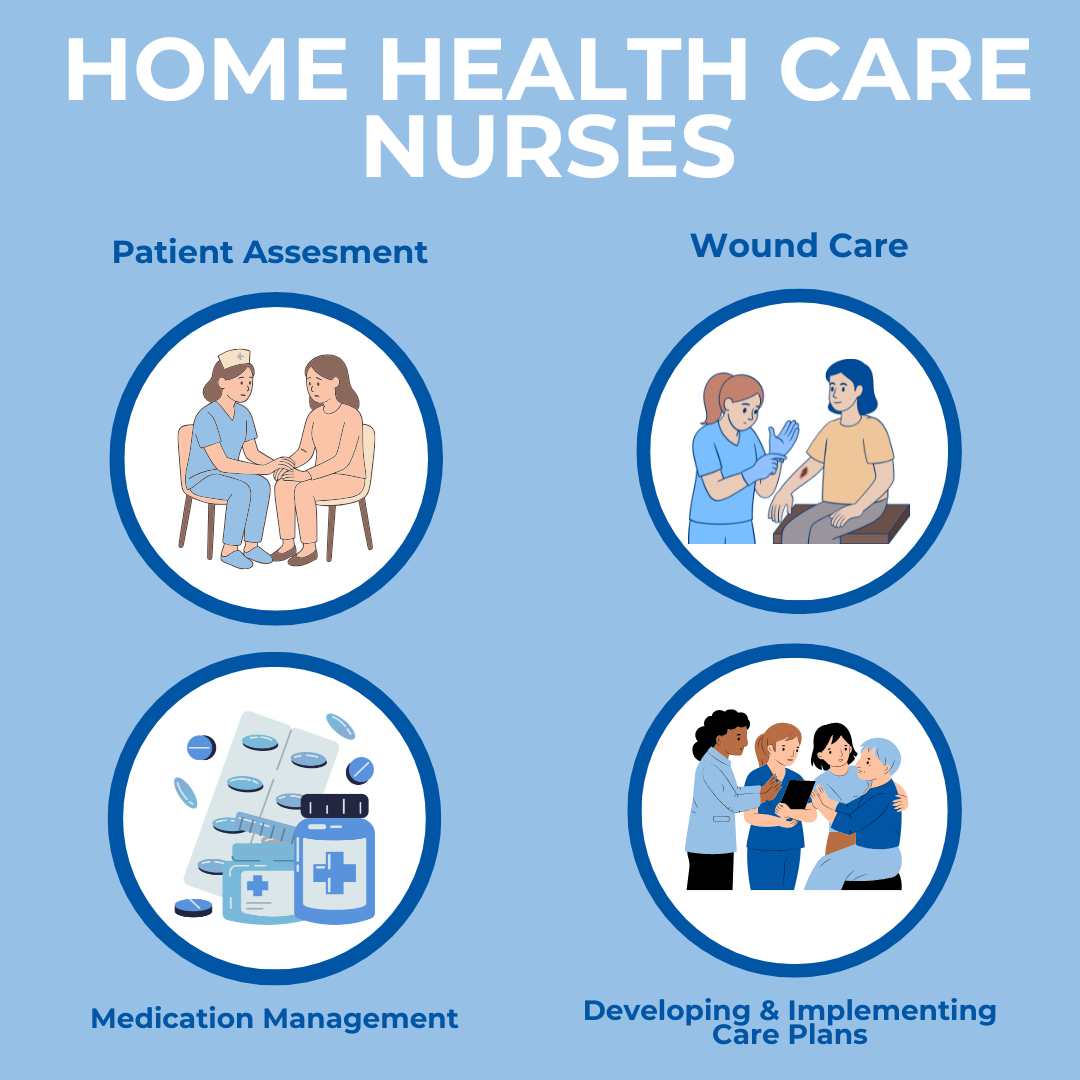
- Patient Assessment and Monitoring
- Medication Management and Administration
- Wound Care and Specialized Treatments
- Developing and Implementing Care Plans
- Patient and Family Education
- Emotional Support and Advocacy
Effective care coordination also falls under these responsibilities. Nurses communicate with other healthcare providers to align on patient care goals. This holistic approach maximizes patient outcomes.
Home health nurses need to be versatile. They adapt to each patient’s unique situation and environment. This adaptability ensures personalized care, making home health services effective.
Patient Assessment and Monitoring
Assessing and monitoring patients is fundamental in home health care. Nurses routinely evaluate patients’ health status, which is crucial for tracking progress and adjusting care plans.
Home health nurses conduct comprehensive assessments, evaluating physical, emotional, and social health. This thorough approach provides a complete picture of the patient’s needs.
Assessment and Monitoring Duties:
- Vital Signs Monitoring: Regular checks for abnormalities
- Health Status Evaluation: Continuous monitoring of patient improvement or decline
- Documentation: Accurate recording of health changes and interventions
Monitoring ensures that any health changes are addressed promptly. Nurses use these observations to guide patient care, helping to prevent complications.
Medication Management and Administration
Managing medications safely is another key duty. Home health nurses ensure patients adhere to prescribed regimens, reducing the risk of adverse effects and promoting recovery.
Accurate medication management involves several steps. Nurses verify the correct dosage and timing for each medication and educate patients about their prescriptions.
Key Responsibilities in Medication Management:
- Dosage Verification: Ensuring correct amounts are taken
- Timing Coordination: Aligning medication schedules
- Patient Education: Teaching about side effects and interactions
Proper medication management can significantly improve a patient’s health. Nurses play a critical role in ensuring medication routines are followed diligently.
Wound Care and Specialized Treatments
Wound care is a specialized duty of home health nurses. They manage various types of wounds, promoting healing and preventing infections. This requires skill and attention to detail.
Nurses perform wound assessments regularly, change dressings as needed, and monitor for signs of infection. This vigilance ensures proper healing.
Specialized Treatments:
- Wound Assessment: Evaluating and treating wounds effectively.
- Dressing Changes: Applying and changing sterile dressings.
- Infection Control: Monitoring for signs of infection.
Wound care is an essential part of patient recovery. These treatments contribute significantly to improved health outcomes, requiring a knowledgeable and meticulous approach.
Developing and Implementing Care Plans
Care plans guide home health services. Nurses develop these plans based on each patient’s needs, ensuring comprehensive and individualized care.
This process involves collaboration with patients and families. Nurses assess needs, set health goals, and devise strategies to achieve them.
Elements of a Care Plan:
- Needs Assessment: Understanding patient-specific care requirements.
- Goal Setting: Defining attainable health objectives.
- Strategy Implementation: Outlining steps to meet patient goals.
Implementing care plans requires ongoing evaluation and adjustment. Nurses must remain flexible and responsive to enhance care effectiveness.
Patient and Family Education
Education is a vital component of home care. Nurses empower patients and families with knowledge, fostering independence and self-management.
They provide education on health conditions and treatments and offer resources for continued learning. Well-informed families can better support patient recovery.
Educational Focus Areas:
- Health Condition Knowledge: Understanding diagnoses and prognoses.
- Self-Care Techniques: Teaching daily management skills.
- Resource Provision: Providing access to educational materials.
Educated patients often experience better health outcomes. Nurses play a key role in bridging knowledge gaps and promoting informed care decisions.
Emotional Support and Advocacy
Providing emotional support is part of holistic care. Home health nurses offer compassion and empathy. They help patients cope with the emotional aspects of illness.
Advocacy is closely linked to emotional support. Nurses advocate for patient needs within the healthcare system. They ensure that patients receive appropriate resources.
Support and Advocacy Duties:
- Emotional Support: Offering empathy and understanding.
- Patient Advocacy: Ensuring access to necessary services.
- Resource Coordination: Connecting patients with available support networks.
Patients dealing with illness need comprehensive support. Nurses provide this, fostering resilience and well-being. Their advocacy ensures that patient voices are heard and needs addressed.
Collaboration and Care Coordination
Collaboration is critical in home health services. Nurses work closely with healthcare professionals to ensure seamless and comprehensive care delivery.
Care coordination involves integrating services across disciplines and maintaining open communication among providers.
Key Aspects of Collaboration:
- Interdisciplinary Team Meetings: Regular discussions to align care plans.
- Referral Management: Coordinating additional services as needed.
- Communication with Physicians: Regular updates and consultations on patient progress.
Effective collaboration reduces duplication of effort and ensures holistic care. By coordinating resources, nurses help improve patient outcomes.

by Vitaly Gariev (https://unsplash.com/@silverkblack)
Home Care Responsibilities: Supporting Daily Living
Home health nurses play a vital role in supporting daily living activities. They assist patients with tasks that can become challenging due to illness or disability. This support aims to maintain patient independence at home.
Assistance with activities of daily living (ADLs) is a core aspect of home health services. Nurses help with bathing, dressing, and mobility. They ensure that these tasks are performed safely and efficiently.
Important Home Care Responsibilities Include:
- Bathing and Grooming: Maintaining personal hygiene.
- Meal Preparation: Ensuring nutritional needs are met.
- Assisting with Mobility: Helping patients move safely around their homes.
These responsibilities enhance the quality of life for patients. By addressing basic needs, home health nurses contribute significantly to patient well-being. Their support allows patients to live comfortably in familiar surroundings.
Caregiver Responsibilities and Family Involvement
Family involvement is essential in home health care. Nurses collaborate with family members to ensure comprehensive support.
Caregivers monitor progress, report changes, and assist with daily care.
Family members assist in:
- Medication Reminders: Ensuring timely medication.
- Emotional Support: Providing companionship and encouragement.
- Helping with Exercises: Assisting with prescribed physical activities.
By engaging family members, home health nurses build a support network. This team effort improves patient outcomes and fosters a nurturing home environment. Effective communication with family is key to achieving these goals.
Essential Skills and Qualities for Home Health Nurses
Home health nurses need a diverse skill set. Empathy and patience help build trust, while strong communication ensures clarity in care.
Key skills include:
- Problem-solving: Making quick decisions.
- Adaptability: Adjusting to different home settings.
- Technical Know-how: Using medical devices proficiently.
Attention to detail, time management, and cultural sensitivity further enhance care quality and patient satisfaction.
by National Library of Medicine (https://unsplash.com/@libraryofmedicine)
Challenges in Home Health Nursing
Home health nursing presents unique challenges, including varied environments and limited resources.
Common challenges include:
- Safety Hazards: Identifying and mitigating risks.
- Emotional Strain: Building relationships yet facing loss.
- Variable Schedules: Adapting to patients’ needs.
Emotional resilience and ongoing support are essential. Despite challenges, nurses find fulfillment in delivering personalized care.
Strategies for Success in Home Health Nursing
Success in home health nursing requires strategic approaches. Nurses should prioritize patient-centered care and adaptability.
Continuous learning is vital. Staying updated with healthcare practices enhances service delivery.
Strategies for success include:
- Effective Communication: Engage with patients and families clearly.
- Time Management: Organize visits and tasks efficiently.
- Problem-Solving Skills: Handle unexpected challenges adeptly.
A strong professional network also supports long-term success.
The Future of Home Health Services
Home health services are evolving rapidly. Advances in technology play a key role in this transformation.
Virtual care and telehealth are becoming common. Patients benefit from remote monitoring and consultations, enhancing convenience and care quality.
Emerging Trends in Home Health Services:
- Telehealth Integration: Expanding virtual consultations.
- Remote Monitoring: Using devices for real-time health data.
- AI Tools: Assisting in decision-making and diagnostics.
These innovations improve accessibility, efficiency, and patient outcomes.
Conclusion and Key Takeaways
Home health care nurses are essential to patient well-being. Their role spans medical care, education, and emotional support.
Key Takeaways:
- Versatile Duties: Cover a range of care aspects.
- Patient-Centered: Focus on individual needs and preferences.
- Collaborative Role: Work with families and healthcare teams.
As healthcare evolves, home health nurses remain critical to delivering high-quality, personalized care.