ARTICLE
Does Hospice Cover 24-Hour Care at Home?
No. Hospice at home is visiting care, not round-the-clock care. A nurse, an aide, a social worker and a chaplain come on a schedule, and a nurse is reachable by phone at any hour. Nobody stays in the house overnight.
That answer disappoints most families who ask it, and it usually arrives at the worst possible moment. Somebody has stopped sleeping. Somebody is lifting a parent alone at 3am and is frightened of dropping them.
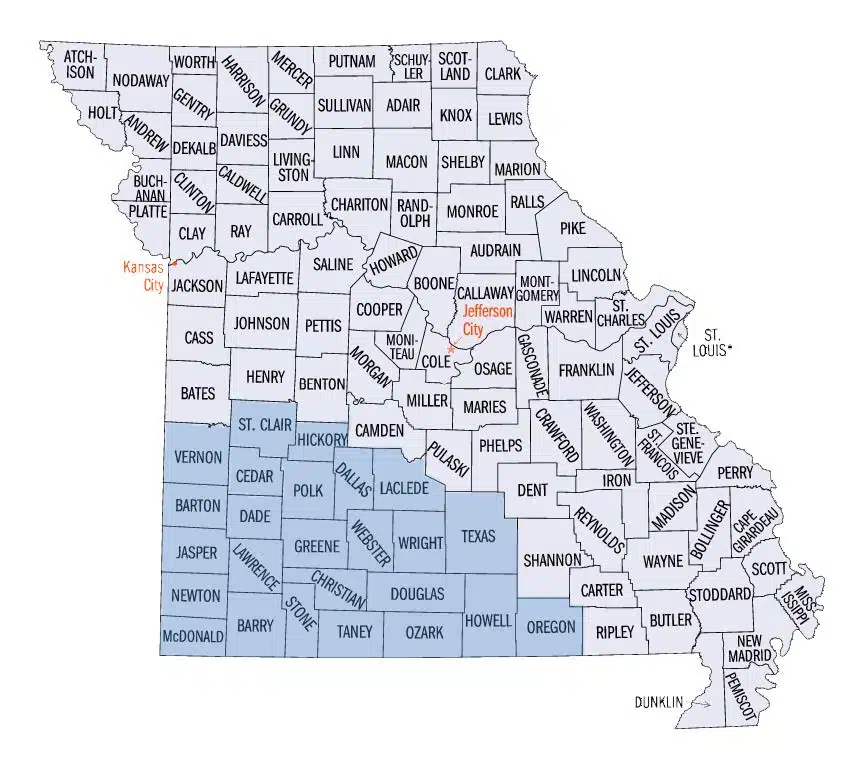
So this guide covers the honest version. How often hospice actually visits, the one situation where hospice does send someone for hours at a time, what to do when you need a break, and how families around Springfield and Ozark cover the hours hospice does not. If you are in the middle of this right now, you can call our hospice team in Ozark and ask what we could realistically provide.
Not sure how you will cover the nights?
Talk with a Haven nurse about what hospice would provide, what it would not, and how other families in the Ozarks fill the gap.

How often does hospice actually visit?
Less often than most families picture.
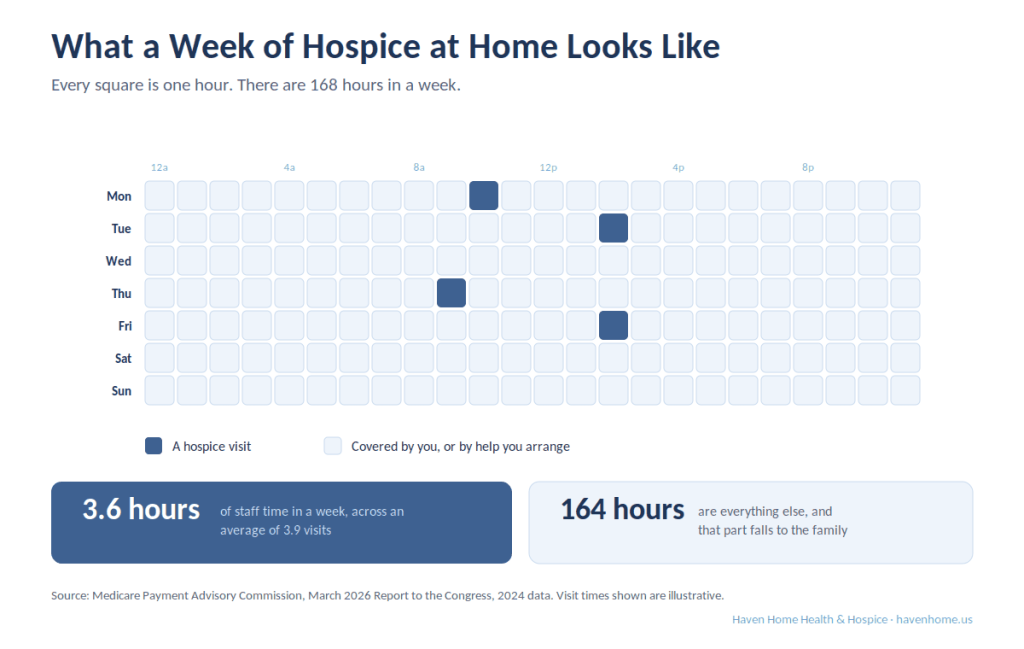
In 2024, patients at the standard level of hospice care received an average of 3.9 in-person visits per week, each lasting just under an hour. That is roughly three and a half hours of staff time across a full week.
That standard level is called routine home care, and it is what almost everyone receives. It accounted for 98.8% of all Medicare hospice days in 2024.
A nurse is available by phone day and night, and can come out when something goes wrong. That matters, and it is worth knowing you can use it. But a phone line is not the same as someone being there, and it is better to understand the difference in week one than to discover it at 3am in week three.
Is there a level of hospice that sends someone for hours?
Yes, and it is called continuous home care. It is the one part of the hospice benefit built for a crisis.
Continuous home care brings a nurse into the home for a block of hours to get symptoms back under control, with the goal of keeping your loved one out of the hospital. Medicare requires a minimum of eight hours of care in a 24-hour period, and more than half of that time has to be skilled nursing rather than aide care.
Two things families should understand about it.
It is for a crisis, not for staffing. It is triggered by uncontrolled pain, severe breathing difficulty, or sudden agitation. It is not available because the family is exhausted, however reasonable that need is.
It is rare. In 2024, only 2% of hospice patients received even a single day of continuous home care. If a hospice promises it routinely during an admission conversation, ask them what their actual numbers look like.
Can you get a break as the caregiver?
Yes. This is the part of the benefit most families never use, and it exists specifically for you.
Inpatient respite care moves your loved one into a facility for a short stay so the person caring for them can sleep, travel, or simply stop. Medicare allows up to five consecutive days at a time. You may owe 5% of the Medicare-approved amount, and that charge cannot exceed the inpatient hospital deductible.
In 2024, only 4% of hospice patients had even one day of respite care. The benefit is sitting there mostly unused while families run themselves into the ground.
If you are close to your limit, ask about respite before you reach it, not after.
What if symptoms cannot be managed at home at all?
Then the fourth level applies. General inpatient care moves your loved one to a hospital, a nursing facility or a hospice unit for symptoms that cannot be controlled where they are.
This is more common than the other two higher levels. In 2024, 16% of hospice patients had at least one day of general inpatient care. It is usually short, and the goal is to get symptoms settled and bring the person home again.
Need more than visiting care?
In-home care covers the rest of the week
Bathing, dressing and personal care
Meals, errands and light housekeeping
Companionship, by the hour or overnight
So who covers the other hours?
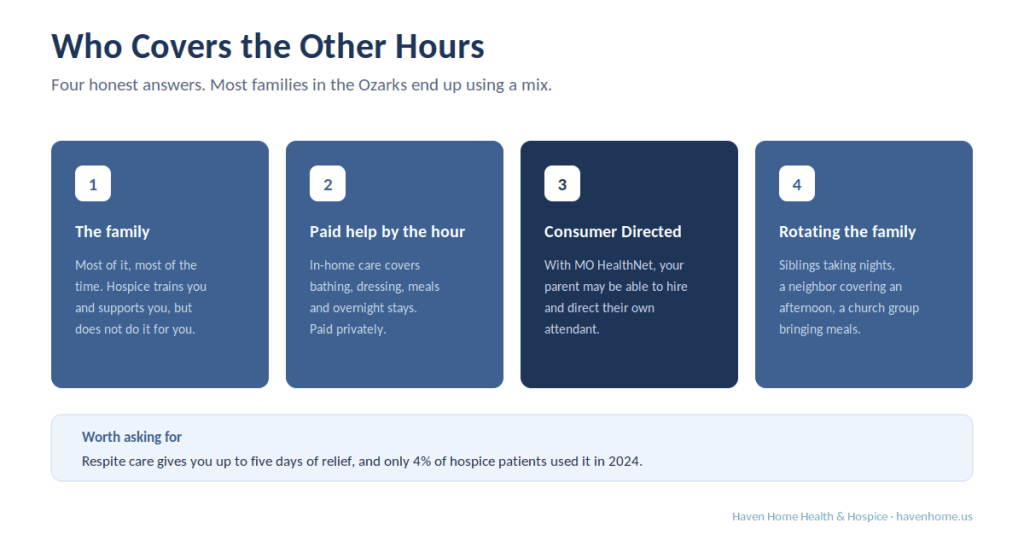
This is the real question, and it has four honest answers.
The family. Most of it, most of the time. Hospice trains you to do the lifting, the bathing and the medication, and supports you through it. That is the arrangement, and it is heavier than most people expect.
Paid help by the hour. In-home care covers bathing, dressing, meals, companionship and overnight stays, billed hourly and paid privately. It runs alongside hospice rather than replacing it, and it is what most families use to cover nights. We cover what that costs in our guide to home health care costs.
Consumer Directed Services. If your loved one has MO HealthNet, Missouri’s Medicaid program, and needs a nursing-facility level of care, they may be able to hire and direct their own personal care attendant through Consumer Directed Services. The attendant can be an adult child, another relative, a friend or a neighbor. A spouse or legal guardian cannot be paid this way. The program has no waiting list.
Rotating the family. Siblings taking nights in turn, a neighbor covering an afternoon, a church group bringing meals. It is unglamorous and it is what carries most families through.
What families around here actually do
Most households in the Ozarks end up with a mix. Hospice handles the clinical care and the medication. Paid help covers the two or three nights a week where the family simply cannot keep going. The family covers the rest.
A good hospice team will help you build that plan rather than leaving you to work it out alone. Ask your social worker directly. That is exactly what they are for, and it is one of the most underused parts of the benefit.
Three things worth remembering. Hospice at home is visiting care, averaging under four visits a week. Continuous home care exists but is reserved for a crisis and is rare. Respite care gives you up to five days of relief and almost nobody uses it.
Haven is locally owned, based in Ozark, and serving Springfield, Ozark, Nixa, Republic, Rogersville and Branson. Call to talk through what your family needs and what we could actually provide.
Take Action Now
Talk to a Haven hospice nurse
Locally owned, with our office in Ozark. Call to talk through what your family needs and what we could realistically provide.